Values-Driven Leadership: Lessons from JMMB on Building Sustainable Business Success
At a time when many organisations are focused on strategy, scale and speed, a different perspective is gaining traction: that values‑driven leadership, grounded in love, is at the core of sustainable business success, shaping not just what leaders do, but how they lead. That perspective lies at the heart of the JMMB Group’s approach to leadership, shaped by the beliefs and personal values of its co‑founder, Joan Duncan, where love, integrity, respect, accountability and care are not aspirational ideals, but principles that guide everyday decisions and actions.
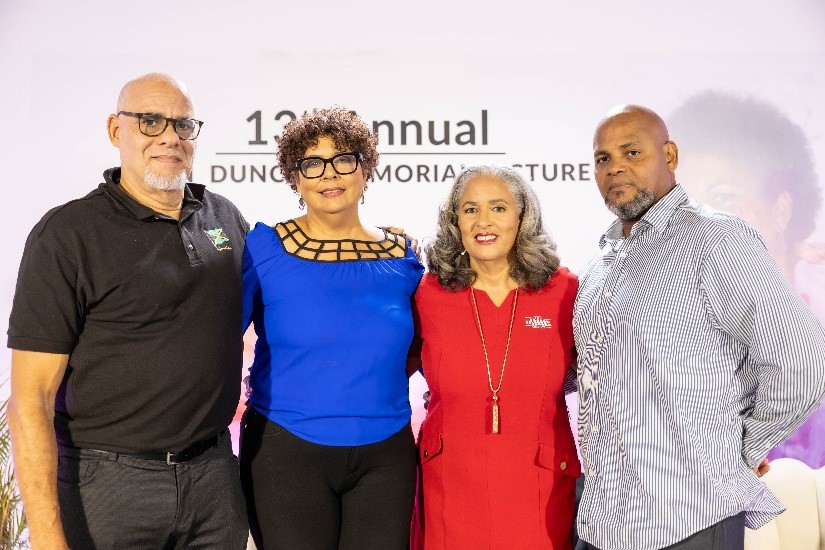
Insights emerging from the 13th staging of the Joan Duncan Memorial Lecture, which was broadcast on Television Jamaica (TVJ) under the theme “What’s Love Got to Do With It: How Family Values Drive Entrepreneurial Success,” reinforce a critical but often overlooked truth: that the values learned in the home, particularly unconditional love, are not separate from business success; they are foundational to it. The discussion, led by Joan Duncan’s children—Patricia Duncan‑Sutherland, Keith Duncan, Donna Duncan‑Scott and David Duncan—offered deeply personal reflections on how these values shaped both their upbringing and their approach to leadership and business.
“We often think of values as personal, but they are very practical,” said Patricia Duncan‑Sutherland, Chairman of the JMMB Joan Duncan Foundation. “Love, integrity and respect shape how we make decisions, how we engage others and how we build trust. They show up in leadership every single day.”
At its core, the discussion highlighted that love, when applied intentionally, is not a soft concept; it is a leadership discipline. It requires honesty, openness and a willingness to treat people with fairness and dignity, even in challenging circumstances. “Unconditional love is what she [Joan] taught me,” said Keith Duncan, Chief Executive Officer, JMMB Group. “No matter how far you stray or get it wrong, someone is still in your corner, still willing to work with you and have honest conversations. When you lead from that place, it shapes how you deal with people and the decisions you make.”
Another powerful takeaway is that culture is not created by policies but by lived experience. Joan Duncan did not separate her home life from her work life; she built an environment where openness, equality and shared contribution were expected. “We were raised in a space where everyone’s voice mattered,” Patricia added. “You respected roles, but equality was real; your ideas could be contributed, whether you were leading or learning. That same approach carried into how the organisation was built.”
This emphasis on equality and belonging has direct implications for how organisations function. When individuals feel respected and valued, they are more willing to contribute, collaborate and take ownership of outcomes.
At an organisational level, the discussion reinforced that values must be consistently practised to influence performance. The way teams communicate, respond to challenges and support each other ultimately defines the strength of the culture. “The Vision of Love is not something we do, it’s who we are,” said Donna Duncan‑Scott, Group Chief Culture and Human Development Officer, JMMB Group. “We continuously support our team members to understand their own greatness and to choose, moment by moment, to come from love instead of fear or ego. That is what shapes behaviour, relationships and results.”
The conversation also challenged long‑standing assumptions about business success, particularly the idea that performance must come at the expense of people. Instead, it illustrated how love and accountability work together, creating environments where individuals are both supported and expected to deliver. “My mother believed that everybody deserved the opportunity to succeed,” said David Duncan, Chief Executive Officer, Optimum Distributors. “She didn’t believe wealth‑building should be limited to a few. Whether it was ensuring people could invest with small amounts or even supporting team members to own their own homes, she led with the belief that people must share in success.”
These examples highlight a broader principle: that organisations that prioritise people and relationships are better positioned for long‑term growth. When individuals feel seen, supported and empowered, they are more likely to innovate, take initiative and contribute meaningfully.
A recurring theme throughout the discussion was that love is not passive. It is intentional, disciplined and expressed through action. It is reflected in how leaders listen, how decisions are made, and how organisations respond to both success and failure.
At its core, this approach reflects a belief that business success and human development are deeply interconnected. By placing love at the centre of leadership, organisations can build trust, strengthen culture and achieve sustainable performance.
For entrepreneurs, young professionals and emerging leaders, the message is clear: lasting success is built not only on strategy and opportunity, but on the consistent, everyday practice of values, especially love, in how we lead, relate and decide.